
interviste
Michael McDermott Un incontro con il songwriter di Chicago Michael McDermott in vista del prossimo tour italiano
D. La tua musica è spesso descritta come profondamente personale e basata sulla narrazione, e i tuoi testi esplorano spesso temi di redenzione e lotta. Cosa ispira maggiormente la tua scrittura? Ci sono libri, film o influenze non musicali che hanno avuto un grande impatto sul tuo lavoro?
R. Tutto è un'influenza. È difficile individuare da dove provenga l'ispirazione. Tutto è fonte di ispirazione, a volte in modo positivo, altre volte in modo negativo. Cerco di essere presente nella vita, di essere un osservatore, un testimone di tutto ciò che accade. Fondamentalmente, cerco di non interferire con il processo creativo. Lo affronto rendendomi disponibile ad esso.
D. Come pensi che il tuo stile sia evoluto dai tuoi primi album?
R. A volte, la conoscenza è una cosa pericolosa, ma posso dire che ho imparato di più sul processo creativo. A volte la mente prende il sopravvento sul cuore, e non è sempre un bene; a volte però questo è necessario, per dare un senso alle emozioni e agli eventi che ci colpiscono tutti, per offrire una prospettiva o una narrazione. Le canzoni migliori, i momenti migliori, nascono quando mente e cuore si incontrano. Quando sei giovane, il tuo motore è alimentato dalla pura passione; col tempo, ho cercato di dare un senso a quegli impulsi che, nella mia giovinezza, mi avrebbero fatto schiantare contro un muro.
D. Molti artisti faticano a rimanere fedeli a se stessi pur adattandosi all'industria musicale. Come sei riuscito a mantenere la tua integrità artistica?
R. Con l'isolamento. Conoscevo bene “The Machine” quando si spendevano centinaia di migliaia di dollari senza esitazione, ma ora sono molto lontano da quel mondo. Non guardo i Grammy da 30 anni, perché hanno tanto a che fare con il mio mondo quanto un evento di equitazione. Non faccio ciò che fanno loro, e non so più nemmeno cosa sia: capisco meglio il sumo wrestling dei Grammy!
D. Hai avuto un lungo percorso, sia musicalmente, sia personalmente. In che modo le tue esperienze hanno influenzato il tuo approccio alla vita e alla musica?
R. L'esperienza colora ogni tela, e a volte in modo negativo. I cavalli sanno dove sta guardando il cavaliere quando li monta, e la vita funziona allo stesso modo. A volte, cerco di dare un senso al mio passato e a tutta la sua follia, e altre volte guardare indietro corrompe il mio presente, ed è molto pericoloso. Non sono nemmeno sicuro di cosa stia cercando di sistemare, perché c'è un'ossessione che sembra ineluttabile. Errori, traumi, rimpianti, vergogna?... Comunque proiettano un'ombra lunga.
D. Essere un musicista significa spesso affrontare lunghi tour e stare lontano da casa. Come bilanci la musica con la vita familiare?
R. È molto difficile. Cerco di ricordare a me stesso che questo ERA il sogno. A volte, nella vita, i sogni cambiano o si ricalibrano. Sono fortunato, e cerco di ricordarmelo, ma a volte lo dimentico.
D. "Lighthouse on the Shore" è caratterizzato da un'introspezione acustica, mentre "East Jesus" ha un suono elettrico potente, come ho scritto nella mia recensione. Cosa ti ha spinto a pubblicare questi stili contrastanti insieme in un doppio album?
R. Le mie personalità multiple. Mi annoio facilmente, e la cosa peggiore per un artista è essere noioso. C’è una tempesta di cose che mi muovono: una parte di me vuole stare in una band da bar, e un’altra vuole leggere poesia in silenzio. A volte mi confondo su chi sono...
D. Il brano "Lighthouse on the Shore" affronta temi di amore, gratitudine e speranza. Puoi raccontarci l'ispirazione dietro questa canzone e come riflette il tuo percorso personale?
R. L'ho scritta per Heather (Orton, la moglie, anche lei musicista, ndr) e per quel tipo di amore che può salvare una vita. Non sarei più su questo pianeta meraviglioso, bellissimo, folle e incasinato, se non fosse per lei.
D. Penso che "East Jesus" abbia il potere di risollevare l’umore di chi lo ascolta. Come hai affrontato il processo di scrittura e produzione per ottenere questo effetto?
R. Volevo che fosse grande, ispiratore. Quindi sapevo che dovevamo dargli forza. La mia band, The Arsonists (Steven Gillis, Grant Tye, Matt Thompson, Rich Parenti), ha suonato di più su quell’album perché sono grandi, potenti e bellissimi, insieme a Heather, Will Kimbrough e John Deaderick, che sono con me in ogni album. Sanno cosa sto cercando di fare, non devo nemmeno dirglielo, sono semplicemente brillanti, e il suono di tutto l'album è influenzato da loro.
D. Stai per esibirti in diverse città italiane, incluso un concerto speciale con la band al completo a Magenta il 12 aprile. Cosa possono aspettarsi i fan da questa performance unica?
R. Presenterò brani dai due nuovi album insieme a pezzi del passato. Ci saranno spettacoli in solo, in duo e a Magenta un unico concerto con la band al completo per questo tour europeo, ma posso assicurare che ogni concerto sarà davvero speciale e unico.
D. La tua musica ha un forte aspetto narrativo. Come adatti la scaletta per il pubblico internazionale, in particolare in Italia, per garantire connessione e comprensione culturale?
R. Cerco di non fare le canzoni che sono troppo dense di testi, o, almeno, di non cantarle troppo velocemente...(ride, ndr)
D. Hai un grande seguito in Italia. Ci sono situazioni particolari che non vedi l’ora di vivere durante il tuo tour?
R. L'Italia è come una seconda casa per me. I miei amici sono come una famiglia. Ho una lunga storia qui. Mi sono sposato qui quasi 16 anni fa...È un ritorno a casa.
D. I tour possono essere sia esaltanti, sia estenuanti. Come mantieni energia e passione durante tournée lunghe, e cosa aspetti con più entusiasmo, pensando al tuo tempo in Italia?
R. È difficile. Bisogna dormire quando si può, e parlare poco, perché parlare affatica la voce più che cantare. Ma non vedo l’ora di respirare l’aria italiana, gustare il cibo, vedere i sorrisi, ascoltare i suoni, ammirare il paesaggio, ricevere abbracci, cantare, sentire le campane, camminare per le strade, ascoltare la lingua italiana, godere della gentilezza, del calore, della passione, della convivialità.
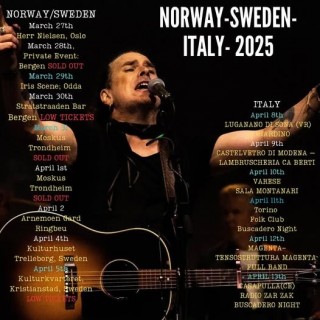
E noi ci saremo ad abbracciarti! Ecco le date del tour:
8 aprile - Lugagnano di Sona (VR) - Il Giardino
9 aprile - Castelvetro di Modena . Lambruscheria Ca' Berti
10 aprile - Varese Sala G. Montanari - Ex Cinema Rivoli
11 aprile - Torino - Folk Club (Buscadero Night)
12 aprile - Magenta (MI)- Tensostruttura Piazza Mercato (FULL BAND)
13 aprile - Casapulla (CE) - Radio Zar Zak (Buscadero Night)
IN ENGLISH:
1. Your music has been often described as deeply personal and storytelling-driven, and your lyrics often explore themes of redemption and struggle. What inspires your songwriting the most?Are there any books, films, or non-musical influences that have had a major impact on your work?
It’s all an influence. It’s hard to pinpoint where inspiration comes from. Everything is inspiring, some in good and sometimes bad ways. You try and be present in life and be an observer, a witness to it all. Basically I try and stay out of the way of the process. I confront it by making myself available for it.
2. How do you think your style has evolved since your early albums?
Sometimes knowledge is a dangerous thing . I’ve learned more about the process. Sometimes your mind takes over from the heart, which isn’t always a good thing. Sometimes you need to in order to make sense of feelings and events that befall all of us. To offer insight, or perspective or a narrative. The good songs, the good moments are when they both meet at an intersection. When your younger your engine is fueled by pure passion so I think over the years I’ve sought to make sense of these impulses that in my youth had me driving over a cliff.
3. Many artists struggle with staying true to themselves while adapting to the industry. How have you managed to maintain your artistic integrity?
Isolation. I used to know “The Machine” when hundreds of thousands of dollars were spent without hesitation. I’m so far removed from that world now. I’ve never watched the Grammys in 30 years because it has as much to do with my world as an equestrian event. I don’t do what those people do. I don’t know what that is anymore. I understand Sumo wrestling more than I understand The Grammys.
4. You’ve had a long journey, both musically and personally. How have your experiences shaped your approach to life and music?
It colors every canvas. Sometimes to a detriment. Horses know where the rider is looking when it mounts them. Life has a way of doing that too. Sometimes because I’m trying to make sense of my past and all its madness sometimes looking back corrupts my present. It’s very dangerous. I’m not even sure what I’m trying to get right. There is a haunting that seems inescapable. Mistakes, Trauma, Regret, Shame? It casts a long shadow.
5. Being a musician often means long tours and time away from home. How do you balance music with family life?
It’s very hard. I try and remind myself this WAS the dream. Sometimes in life your dreams have a way of changing or recalibrating. I’m lucky. I try and remind myself of that. Sometimes I forget.
6. "Lighthouse on the Shore" is characterized as a more introspective acoustic collection, while "East Jesus" shows a powerful electric sound. What motivated you to release these contrasting styles together as a double album?
My multiple personalities. I can get bored very easily. The worst thing a performer can be, is boring. There is a torrent of things that drive me. Part of me wants to be in that bar band and part of me wants to quietly read poetry. I get confused as to who I am sometimes.
7. The track "Lighthouse on the Shore" delves into themes of love, gratitude, and hope. Can you share the inspiration behind this song and how it reflects your personal journey?
It was written for Heather and for the kind of love that can save a life. I wouldn’t still be on this wonderful, beautiful, crazy, fucked up planet, if it wasn’t for her.
8. I think that "East Jesus" has the power to lift listeners out of any doldrums. How did you approach the songwriting and production process to achieve this effect?
I wanted it to be big, inspiring. So I knew we had to put some muscle behind it. My band The Arsonists( Steven Gillis, Grant Tye, Matt Thompson, Rich Parenti) play more on that album because they are big, bold and beautiful, along with Heather, Will Kimbrough and John Deaderick, who I use on every album, they know what I’m trying to do, I do t even have to say anything to them, they’re just so brilliant.
9. You're scheduled to perform in various Italian cities, including a special full-band show in Magenta on April 12, 2025. What can fans expect from this unique performance?
I will be featuring songs from the 2 new albums along with stuff from over the years. There are solo shows, duo shows and one band show that will be the only full band show for this tour in Europe, and it will be really special and unique.
10. Your music has a strong storytelling aspect. How do you adapt your setlist for international audiences, particularly in Italy, to ensure cultural connection and understanding?
I try not to do the songs that are intensely lyrical. Or at least sung too fast.
11. You have a big fanbase in Italy. Are there particular aspects you're looking forward to experiencing during your tour?
It’s another home to me. My friends are like family. I’ve had a long history here. I got married here almost 16 years ago. It’s a homecoming.
12. Touring can be both exhilarating and exhausting. How do you maintain your energy and passion during extensive tours, and what are you most looking forward to during your time in Italy?
It’s hard, sleep when you can, don’t talk much, cuz talking is more taxing on your voice than singing. Looking forward to the air, the food, the smiles, the sights, the sounds, the landscape, the hugs, the singing, the bells, the streets, the sounds of Italian Language, the food, the kindness, the warmth, the passion, the togetherness.


