
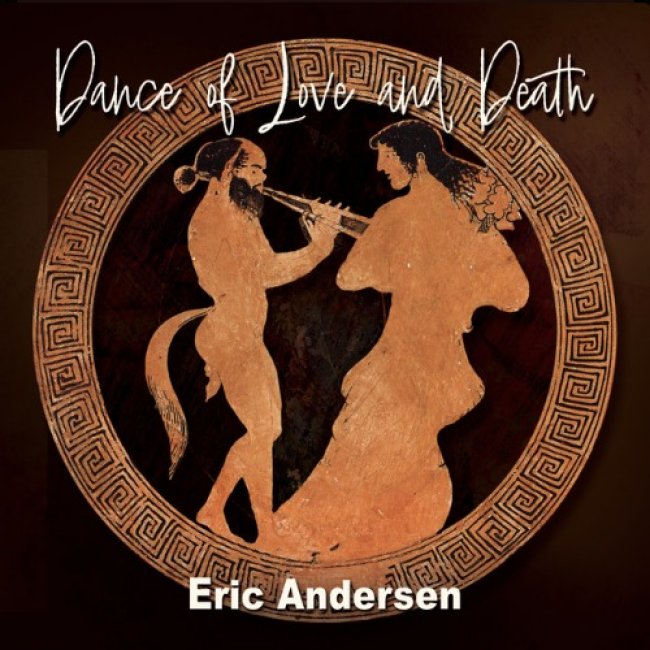
Eric Andersen Dance of Love and Death
2025 - Y and T Music
Inutile girarci intorno: quando un artista è grande e autentico, lo è sempre, nonostante le mode, il tempo che passa, le lievi incrinature della voce. Ed Eric Andersen è grande, da sempre, e lo sarà per sempre. Lo dimostra in questo 2025, in cui, a ottantadue anni compiuti, torna sulla scena musicale non solo con un Live in Tokyo (registrato con Michele Gazich e la moglie Inge), e con In Spoken Pieces, che raccoglie undici brani già registrati in altri album e due presi da video YouTube, ma soprattutto con diciassette canzoni nuove, che compongono un gioiello scintillante: Dance of Love and Death.
Per la confezione di questo nuovo disco, ha collaborato il meglio della scena musicale: ci sono Lenny Kaye, Steve Addabbo e Tony Garnier, i violini e la viola di Michele Gazich, Eric Lee, Joyce Andersen, e Robin Batteau; le percussioni di Jagoda e Cheryl Prashker, e Larry Campbell che suona mandolino, slide e pedal steel guitar, violino, oltre a duettare con lui nella traccia che chiude l'album.
Ballare con i capisaldi della cultura di ogni tempo, Eros e Thanatos, amore e morte, può essere rischioso; può fare male, in equilibrio precario tra ricordi e rimpianti, tra speranze e delusioni. Ma non per un artista superlativo come Andersen, uno dei pochissimi di cui si può dire che abbia attraversato due ere senza perdere coerenza e creatività.
Fin dalla prima traccia, omonima, Andersen segna una strada, invitandoci a seguirlo con fiducia. Sembra dirci: non ho più nulla da dimostrare, ho solo un pugno di belle canzoni, che so come interpretare, come suonare, in punta di corde, circondandomi di musicisti e voci che illuminano il percorso. È il caso, ad esempio, di Love Is a Sacred Thing, chitarra, armonica, violino e harmonies: una carezza per l'anima. O di Singin' Man, perfetta descrizione al sapore d'Irlanda di un busker, come si sente anche lui, formatosi ai tempi del primo Dylan ("I am a street singer and I'am proud that I am!"); o dell'energica After this life, una sorta di inno alla capacità di immaginare una nuova vita, magari in una Hotel room in planet Mars.
Non mancano gli episodi dolenti, che sanguinano ricordi lontani, in una Berlin (River Spree) "paranoica", in cui la voce narrante evoca figure come Fassbinder, in un'atmosfera notturna, di "nightmares" e "demons", dove ci si può perdere per sempre; e l'arrangiamento sottolinea le tinte cupe, tra piano, chitarra e violino. O ancora, Broken bone blues, con la chitarra a fare da seconda voce, per evocare ricordi e brividi. E non dimentichiamoci che Andersen è un grande pianista: immaginiamo quindi la nostra gioia quando ascolteremo live un gioiello come Every Once in a While, ballata alla Tom Waits, cantata con la sua inconfondibile voce, grondante pudica emozione. Una delle vette di un album straordinario.
ENGLISH TRANSLATION
There’s no point beating around the bush: when an artist is truly great and authentic, they always are, regardless of trends, the passing of time, or the subtle cracks in their voice. And Eric Andersen has always been great, and always will be. He proves it once again in this 2025, as he returns to the music scene at eighty-two years old, not only with Live in Tokyo (recorded with Michele Gazich and his wife Inge), and In Spoken Pieces, a collection of eleven previously released tracks and two taken from YouTube videos, but above all with seventeen new songs that form a sparkling gem: Dance of Love and Death.
For this new album, he has gathered the very best of the music scene: Lenny Kaye, Steve Addabbo, and Tony Garnier; the violins and viola of Michele Gazich, Eric Lee, Joyce Andersen, and Robin Batteau; the percussion of Jagoda and Cheryl Prashker; and Larry Campbell, who plays mandolin, slide and pedal steel guitar, violin, and even duets with Andersen on the closing track.
Dancing with the pillars of culture from every era—Eros and Thanatos, love and death—can be risky. It can hurt, teetering between memories and regrets, hopes and disappointments. But not for a supreme artist like Andersen, one of the very few who can truly be said to have spanned two eras without ever losing coherence or creativity. From the very first track, the title track, Andersen sets a path, inviting us to follow him with trust. He seems to say: "I have nothing left to prove, only a handful of beautiful songs, which I know how to interpret and how to play, delicately, string by string, surrounded by musicians and voices that illuminate the way". Take Love Is a Sacred Thing, for instance, with guitar, harmonica, violin, and harmonies: it’s a caress for the soul. Or Singin’ Man, a perfectly Irish-flavored portrait of a busker, the kind Andersen still feels himself to be, formed in the days of early Dylan ("I am a street singer and I’m proud that I am!"). Or the energetic After This Life, a kind of anthem to the power of imagining a new existence—maybe in a hotel room on planet Mars.
There are also painful moments, bleeding with distant memories, like the “paranoid” Berlin (River Spree), where the narrator’s voice evokes figures like Fassbinder in a nocturnal atmosphere of nightmares and demons, a place one could be lost in forever; the arrangement underscores the darkness, with piano, guitar, and violin. Or Broken Bone Blues, with the guitar acting as a second voice, conjuring memories and chills. And let’s not forget Andersen is a great pianist: just imagine the joy of hearing a gem like Every Once in a While live, a Tom Waits-style ballad, sung in his unmistakable voice, brimming with restrained emotion. One of the high points of an extraordinary album.


